

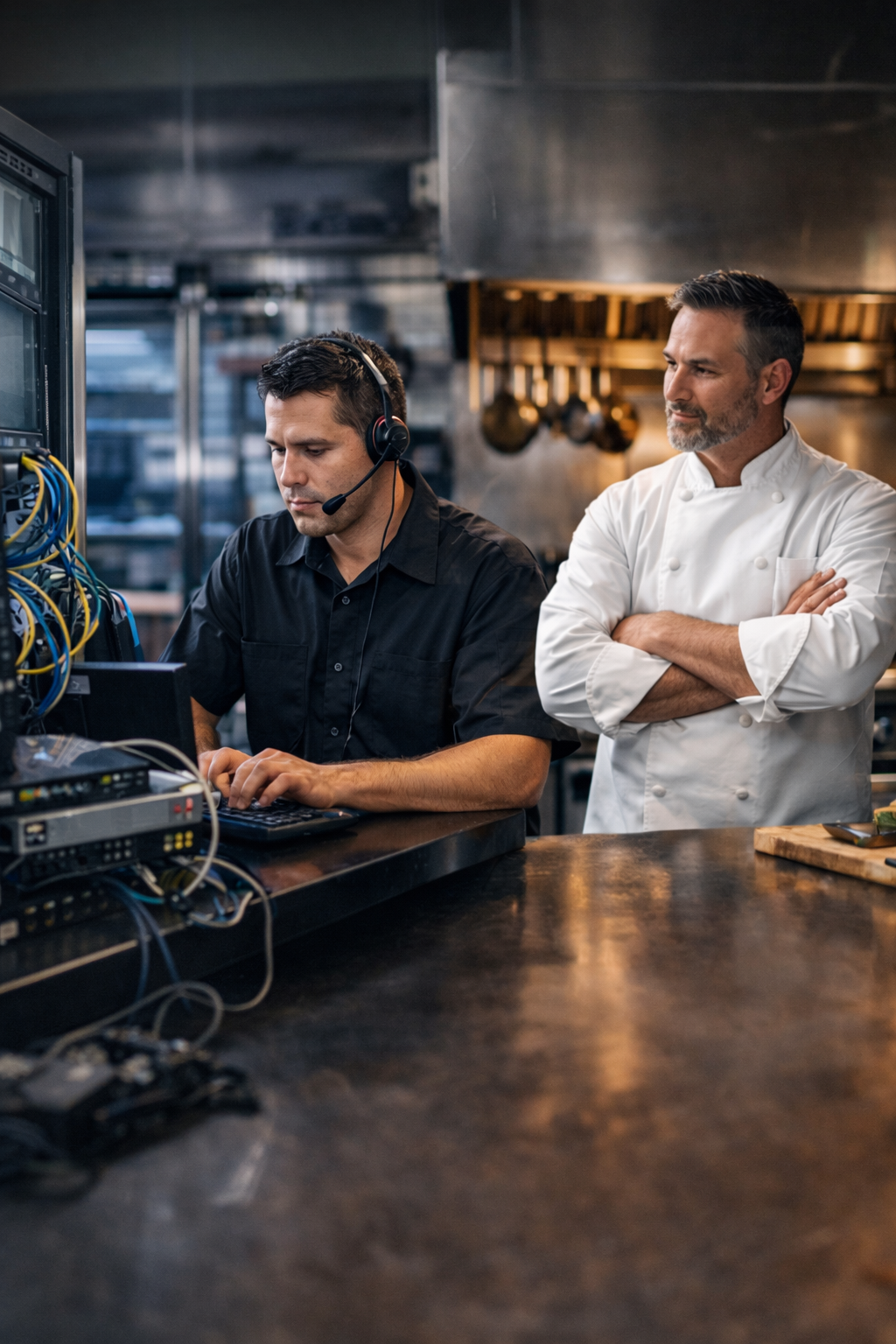
From Cook to Chef in Scalable Team Success
Managed Service Providers grow or stall based on leadership clarity. Tools matter. Talent matters. Process matters. Yet most MSP breakdowns trace back to one root issue. Leaders stay trapped in execution or teams lack direction.
The kitchen model explains this better than any org chart.
In a restaurant, success depends on clear roles. Cooks execute. Chefs lead. When one role replaces the other, quality drops, speed suffers, and chaos spreads. MSPs follow the same rule.
This article breaks down MSP leadership through the cook to chef model. It covers roles, structure, promotion paths, metrics, and common failure patterns. The goal is simple. Help MSPs scale without burning out leaders or breaking delivery.
Why MSP Leadership Fails More Often Than Technology
Most MSP founders start as technicians. They build the business by solving problems faster than anyone else. Early success reinforces this behavior. Clients trust them. Staff lean on them. Revenue grows.
Then complexity arrives.
More clients. More tickets. More staff. More vendors. More risk.
The founder or senior leader stays in the weeds. They keep fixing servers, answering escalations, and jumping into projects. Strategy slows. Standards drift. Teams wait for approval. Growth plateaus.
This is not a skill problem. It is a role problem.
The leader remains a cook when the business needs a chef.
Understanding the Cook and Chef Roles in an MSP
In kitchens, cooks and chefs serve different purposes. Both roles matter. Confusing them breaks performance.
The Cook Role in an MSP
The cook focuses on execution.
Daily responsibilities include
• Resolving tickets
• Applying fixes
• Following SOPs
• Maintaining systems
• Closing work efficiently
Cooks succeed through consistency, accuracy, and speed. Their work protects uptime and client trust.
Strong MSPs invest heavily in cooks. They train them well. They document processes. They remove friction.
The Chef Role in an MSP
The chef focuses on leadership and direction.
Daily responsibilities include
• Designing services
• Setting standards
• Prioritizing work
• Developing people
• Improving systems
• Planning ahead
Chefs do not chase tickets. They shape how tickets flow. They do not solve every issue. They prevent repeat issues.
The chef owns outcomes, not tasks.
Why MSPs Break When Chefs Act Like Cooks
Many MSP leaders feel useful when they fix things. Stepping back feels uncomfortable. Hands-on work provides fast wins and visible impact.
Leadership work feels slower. Abstract. Less urgent.
This creates predictable problems.
• Strategy stalls
• Processes remain undocumented
• Staff wait for answers
• Quality varies by person
• Leaders burn out
The business becomes dependent on heroics instead of systems.
In kitchens, this looks like the head chef cooking every dish while orders pile up and staff wait for direction. In MSPs, it looks the same.
The MSP Kitchen Hierarchy Explained
Scalable MSPs mirror kitchen structure. Roles stay clear. Authority flows cleanly. Growth feels controlled.
Executive Chef
CTO, Director of Operations, Head of Delivery
Responsibilities
• Define service vision
• Set quality standards
• Own delivery outcomes
• Plan capacity and growth
• Drive improvement
This role thinks months ahead. Fires reach them only when systems fail.
Sous Chef
Service managers, senior project managers
Responsibilities
• Run day-to-day delivery
• Enforce SOPs
• Mentor staff
• Manage workload
• Escalate trends
They translate strategy into action.
Line Cook
Engineers and technicians
Responsibilities
• Execute technical work
• Follow procedures
• Support clients
• Log accurate notes
They protect service quality.
Prep Cook
Junior technicians, interns
Responsibilities
• Handle basic tasks
• Learn systems
• Build habits
• Support senior staff
This structure creates stability. Everyone knows where they fit.
Leadership Skills MSP Chefs Must Develop
Strong MSP chefs share common skills. Technical expertise alone does not suffice.
Strategic Thinking
Leaders decide what matters. They choose focus. They say no often. Without strategy, everything feels urgent.
Delegation
Leaders trust systems and people. They stop rescuing work. They accept short-term discomfort for long-term gain.
Communication
Expectations stay clear. Feedback arrives early. Silence never replaces clarity.
Emotional Intelligence
Leaders manage pressure. They read the room. They handle conflict directly and calmly.
Adaptability
Markets shift. Tools change. Client needs evolve. Leaders adjust without panic.
These skills separate scalable MSPs from fragile ones.
Promoting Technicians Without Breaking the Business
Many MSPs promote top technicians into leadership roles. The intention is good. The execution often fails.
Why Promotions Fail
• No leadership training
• No role clarity
• No mentoring
• No metrics beyond tickets
The new manager keeps acting like a technician. They micromanage. They solve instead of leading. Their old workload remains.
The team loses a strong engineer and gains a weak leader.
A Better Promotion Path
Successful MSPs prepare future chefs deliberately.
Key steps include
• Structured mentorship
• Defined leadership responsibilities
• Training in communication and planning
• Clear success metrics
• Gradual reduction of technical load
Leadership becomes a skill, not a reward.
Building SOPs That Support the Kitchen Model
Processes free leaders from execution. Without SOPs, delegation fails.
Effective SOPs share traits
• Clear ownership
• Simple language
• Regular review
• Linked to outcomes
SOPs define how cooks work so chefs focus on improvement.
When SOPs stay weak, leaders step back into execution. The cycle repeats.
KPIs That Reflect Real MSP Performance
Restaurants track performance tightly. MSPs benefit from the same discipline.
Operational Metrics
• Ticket response time
• Resolution time
• Reopen rates
• SLA adherence
Client Metrics
• Satisfaction scores
• Net promoter score
• Complaint trends
People Metrics
• Workload balance
• Skill progression
• Attrition
Financial Metrics
• Monthly recurring revenue
• Delivery cost
• Margin by service
Metrics guide leadership attention. Without them, decisions rely on instinct.
Common MSP Anti-Patterns
Several patterns appear repeatedly in struggling MSPs.
The Hero Leader
One person fixes everything. Growth stalls. Burnout rises.
The Flat Team
No hierarchy. No accountability. Confusion spreads.
The Accidental Manager
Great technician. Poor leader. Team morale drops.
The Tool Chaser
New tools replace leadership discipline. Problems persist.
Recognizing these patterns early prevents long-term damage.
Transitioning From Cook to Chef Without Losing Control
Leaders fear stepping back. Control feels safer than trust.
A gradual shift works best.
• Document critical processes
• Train one backup per task
• Delegate with oversight
• Review outcomes weekly
• Adjust calmly
Control shifts from doing to designing.
The leader gains time. The team gains ownership. The business gains resilience.
Culture Starts in the Kitchen
Kitchens develop strong cultures through standards and respect. MSPs follow the same rule.
Healthy MSP cultures show
• Clear expectations
• Fair accountability
• Continuous learning
• Calm under pressure
Leaders model behavior. Teams follow patterns, not speeches.
The Long-Term Payoff
MSPs that embrace the cook to chef model gain real advantages.
• Scalable growth
• Predictable delivery
• Healthier leaders
• Stronger teams
• Happier clients
Leadership stops feeling reactive. The business becomes intentional.
Final Thoughts
MSP leadership is not about doing more work. It is about building systems that work without constant intervention.
Cooks matter. Chefs matter. Confusing the roles hurts everyone.
The moment an MSP leader steps fully into the chef role, the business changes pace. Growth steadies. Stress drops. Teams mature.
Know your role. Build the kitchen. Lead with purpose.